sam@mkd-led.com
8613794642383



Reliability in lighting sourcing is no longer defined by price alone. Global buyers now evaluate delivery stability, production transparency, and the ability to respond quickly to demand changes. A strong lighting supply chain connects design, sourcing, manufacturing, and delivery into one coordinated system, reducing uncertainty at every stage. According to McKinsey’s global manufacturing insights, companies with integrated supply chains can reduce lead time variability by up to 30 percent while improving order fulfillment rates.
At the core of any reliable LED lighting supply chain is production capacity that matches real demand rather than theoretical output. Many factories list high monthly volumes, but actual performance depends on equipment utilization, workforce stability, and process standardization.
A mature supplier builds capacity through structured planning:
Dedicated production lines for different product categories
Scalable assembly processes that handle both small batches and bulk orders
Stable component sourcing to avoid interruptions
Industry data from Deloitte manufacturing reports shows that factories with standardized production workflows can improve output efficiency by over 25 percent compared to fragmented operations. This directly impacts delivery timelines and consistency across repeat orders.
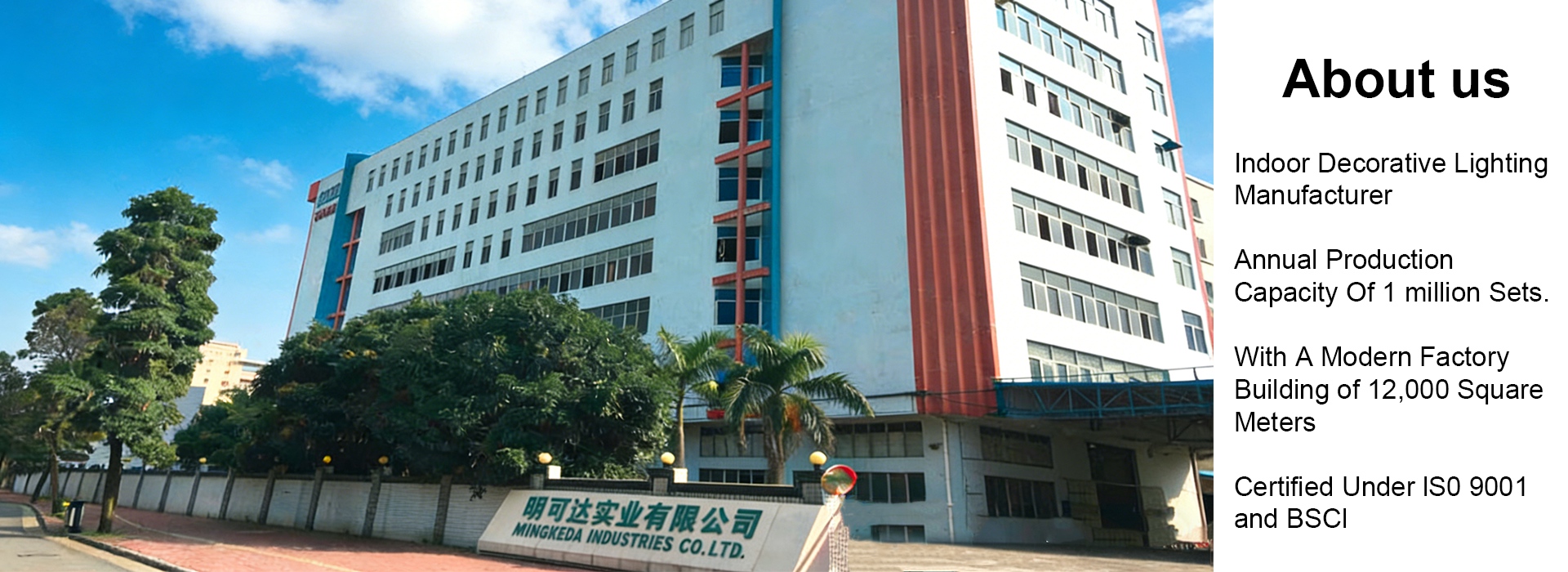
MINGKEDA demonstrates this advantage through its long-established production base and category coverage. With multiple product lines including indoor decorative lighting and functional products, the company ensures that output is not dependent on a single product stream. This reduces risk when demand fluctuates across markets.
Consistency is one of the most overlooked aspects of supply reliability. A well-developed lighting manufacturing system ensures that every unit meets the same specifications across batches, which is critical for projects requiring uniform lighting performance and appearance.
Key elements of a strong system include:
| Process Stage | Control Focus | Impact |
|---|---|---|
| Material inspection | Component quality verification | Reduces defect rate |
| Assembly control | Standardized procedures | Ensures product consistency |
| Electrical testing | Safety and performance checks | Meets certification requirements |
| Aging test | Long-term stability validation | Improves durability |
According to Statista industrial data, quality control processes can reduce product return rates by up to 40 percent in electronics manufacturing. For lighting products, this directly translates into fewer failures in installation environments.
MINGKEDA integrates these processes across its production flow, allowing stable quality output for both standard and customized lighting solutions.
Demand in the lighting industry is rarely static. Seasonal projects, regional trends, and project-based procurement require suppliers to adjust quickly. Flexible lamp production is therefore a key indicator of supply chain strength.
Flexibility is reflected in:
Ability to switch between product types without long downtime
Modular design approaches for faster customization
Engineering support for OEM and ODM development
A flexible production model helps reduce lead time for new product development. Research from PwC highlights that agile manufacturing systems can shorten product development cycles by up to 20 percent.
For buyers sourcing decorative and functional lighting, this means faster response to market trends without sacrificing quality or consistency.
Production alone does not define reliability. Logistics capability determines whether finished goods reach the destination on schedule and in good condition. A strong supply chain integrates production planning with shipping coordination.
Critical logistics factors include:
Consolidation efficiency for bulk shipments
Stable partnerships with freight providers
Packaging standards that prevent damage during transit
Global trade data from the World Bank indicates that logistics performance directly affects delivery reliability, with efficient logistics systems improving on-time delivery rates by more than 15 percent.
MINGKEDA supports international distribution through structured export processes, ensuring that lighting products are packaged, handled, and shipped according to global standards.
Inventory strategy plays a crucial role in maintaining supply stability. Excess stock increases cost, while insufficient stock leads to delays. A balanced approach ensures that popular items remain available while custom orders are produced efficiently.
Modern inventory systems focus on:
Demand forecasting based on historical data
Safety stock for high-volume items
Coordinated production scheduling
According to Gartner supply chain research, companies with advanced inventory planning can reduce stockouts by up to 35 percent while lowering inventory holding costs.
For specialized categories such as a sleep night light supplier, inventory planning becomes even more important because demand is often driven by consumer trends and seasonal purchasing cycles. A responsive system ensures that supply remains stable even when demand shifts rapidly.
A reliable supply chain is not built from isolated strengths. Production capacity, quality control, logistics, and inventory must work together as one system. Weakness in any single link can disrupt the entire process.
MINGKEDA’s advantage lies in combining these elements into a coordinated structure:
Established production foundation with scalable output
Integrated quality control across manufacturing stages
Flexible development capability for customized solutions
Organized logistics and export handling experience
This integrated approach reduces risk, improves delivery reliability, and supports long-term cooperation across different market requirements.
Lighting sourcing decisions increasingly depend on stability rather than short-term cost savings. A well-structured supply chain ensures consistent product quality, predictable delivery, and the ability to adapt to changing demand. Evaluating production capacity, system control, logistics performance, and inventory strategy together provides a clearer picture of supplier reliability and long-term value.