sam@mkd-led.com
8613794642383



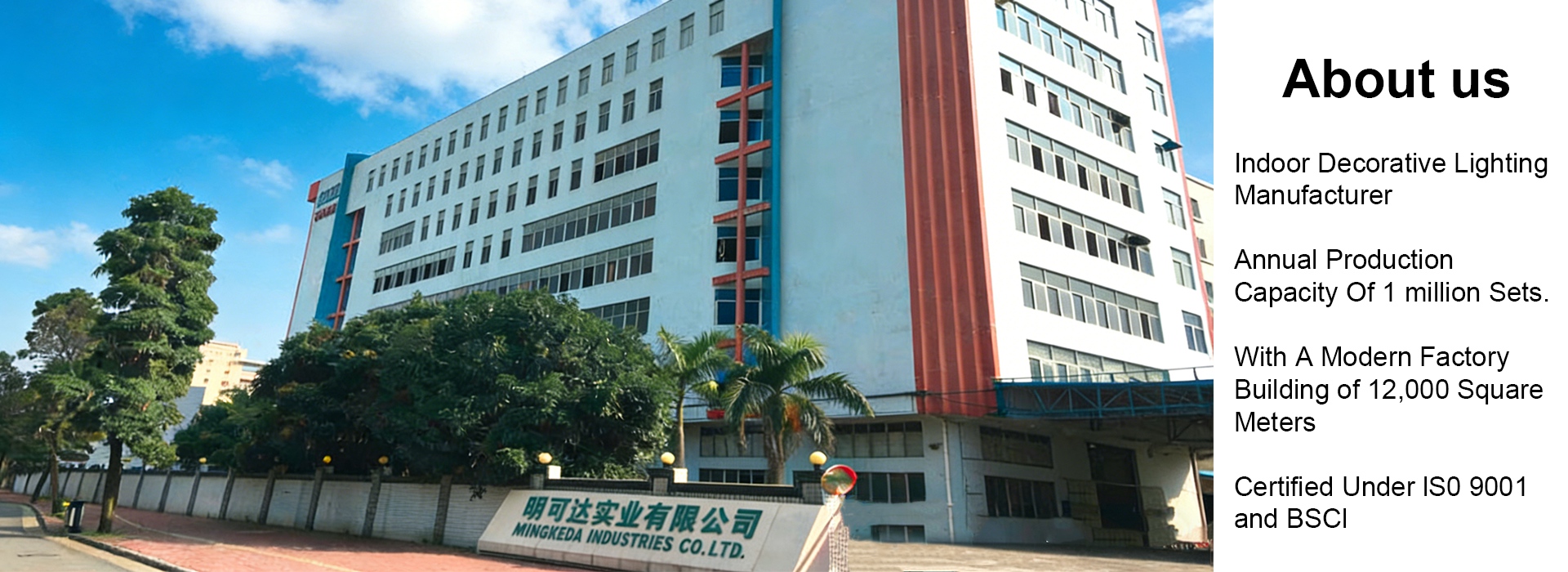
Product stability in lighting is not built at the end of production. It starts with a controlled system that links design review, material verification, process discipline, in-line checks, and final validation into one repeatable workflow. When any one of these steps is weak, the result is often early failure, color inconsistency, driver instability, loose assembly, or customer complaints after shipment. A reliable manufacturer treats stability as a factory-wide responsibility rather than a final checkpoint. At MINGKEDA, this approach is supported by integrated manufacturing, an ISO 9001 management system, a dust-free workshop established in 2022, and product certifications such as CCC, with some models also carrying UL, CB, and CE approvals. The company also highlights more than 200 patents and a 12,000 square meter facility with over 200 staff, which reflects long-term investment in process control and product development.
For any lighting factory, stability begins before mass production. The first requirement is a clear technical standard for each model, including LED source specification, driver parameters, color tolerance, structural materials, packaging protection, and electrical safety targets. Without a fixed standard, production teams may assemble products that look similar but perform differently in real use.
This is where lighting quality control becomes practical rather than theoretical. Incoming materials should be checked against approved samples and technical sheets. Core parts such as LED modules, drivers, switches, batteries, diffusers, metal parts, and power cords need lot-level verification. A stable product cannot come from unstable components, even when final assembly is correct. MINGKEDA’s integrated manufacturing model is useful here because tighter coordination between design, sourcing, and production helps reduce variation across batches.
Many lamp failures are actually material failures that appear later in the field. Driver inconsistency may cause flicker or shortened life. Weak solder quality may lead to intermittent lighting. Poor housing tolerances can create assembly stress, misalignment, or unstable heat transfer. Inferior surface treatment can also affect long-term appearance and corrosion resistance.
A disciplined incoming inspection plan normally covers dimensional checks, electrical parameter checks, finish inspection, and sample-based functional confirmation. For rechargeable or portable products, battery consistency and charging protection also deserve special attention. This early screening step is a key part of the LED lighting quality control process because it prevents defective materials from moving into assembly, where correction becomes slower and more expensive.
STable Lamps are produced through repeatable operations. This means standardized work instructions, calibrated tools, controlled soldering conditions, torque consistency for mechanical assembly, and clear traceability for each batch. Operators should know the acceptable range for every critical step, while line leaders and quality staff should be able to identify deviation quickly.
In practical terms, a sound lamp production quality assurance system usually includes first-piece confirmation, patrol inspection during production, and random checks at fixed intervals. This reduces the risk of mass defects caused by tooling drift, operator variation, or material substitution. MINGKEDA’s own positioning around integrated R&D, design, manufacturing, sales, and service supports this kind of closed-loop production control, especially for decorative and functional LED lighting categories.
Aging is one of the most important methods for exposing early failure. Products may appear normal for a few minutes during assembly, but instability often emerges only after continuous operation. Driver overheating, poor solder joints, component mismatch, and marginal power performance are easier to detect during sustained testing.
For this reason, the LED testing process should include powered aging under defined time and environmental conditions. During this stage, factories typically monitor light output stability, start-up consistency, abnormal heating, flicker behavior, charging performance for rechargeable lamps, and control response for dimmable or touch-control models. Aging does not replace earlier inspections, but it acts as an effective filter for defects that cannot be seen in static checks.
A stable lamp should not only pass the line today. It should continue to perform after transport, repeated switching, extended use, and environmental change. Reliability testing is therefore essential for validating design and process capability.
Common tests include switch cycle testing, high and low temperature exposure, insulation and dielectric checks, salt spray evaluation for selected metal parts, drop or package simulation, and continuous run tests for thermal performance. For reading lamps and decorative lamps, optical consistency also matters, including color temperature stability and appearance uniformity across repeated production lots. MINGKEDA states that key products carry CE, CCC, UL, and CB certifications, which signals attention to safety and market compliance across different regions.
Strong lamp inspection procedures should cover appearance, function, electrical safety, packaging integrity, labeling accuracy, and sampling against customer requirements. This stage confirms that the product shipped is the same product that was approved during development and verified in production.
A useful final inspection plan often includes these checkpoints:
| Control Stage | Main Focus | Stability Benefit |
|---|---|---|
| Incoming inspection | LED source, driver, housing, cord, finish | Reduces component variation |
| In-line inspection | Assembly accuracy, solder quality, function | Prevents batch defects |
| Aging test | Continuous operation performance | Screens early failure |
| Reliability test | Heat, switching, transport, safety | Confirms long-term use |
| Final inspection | Appearance, labeling, packaging, function | Protects shipment consistency |
This kind of layered system is more effective than depending on one final test alone.
The most stable manufacturers do not stop after shipment. They record defect data, analyze return reasons, compare batch trends, and update standards based on actual field performance. That is how process control matures over time. When complaint categories are linked back to material lots, assembly stations, and inspection records, improvement becomes faster and more accurate.
MINGKEDA’s long operating history, broad lighting range, and continued investment in workshop standards suggest a manufacturing model that can support this ongoing quality feedback cycle. For buyers, that matters because stable supply is built on stable internal management, not only on attractive product design.
MINGKEDA’s strength is not limited to product variety. The company presents itself as a manufacturer with integrated R&D, design, manufacturing, and service, backed by ISO 9001 and BSCI management systems, a dust-free production workshop, and multiple international certifications on key products. That combination is important for projects that require stable quality across repeated orders, market compliance, and controlled lead time execution.
Lighting stability comes from a system, not a slogan. Material approval, production discipline, aging verification, reliability testing, and final inspection all need to work together. When these controls are clearly defined and consistently executed, manufacturers can reduce failure risk, improve batch consistency, and protect long-term product reputation. For customers evaluating decorative and functional LED products, a supplier with structured quality management and integrated manufacturing capability offers a stronger foundation for dependable results.
Previous: