sam@mkd-led.com
8613794642383



Heat is one of the most decisive factors behind the real performance of an LED lamp. A fixture may look attractive on the outside and show strong brightness in initial testing, but without effective thermal control, light output can drop faster, color consistency may become less stable, and the overall service life can shorten significantly. ENERGY STAR notes that thermal management is often the single most important factor in LED performance over time, because higher operating temperature speeds up light degradation and reduces useful life. The U.S. Department of Energy also states that excess heat can cause reduced light output, color shift, accelerated lumen depreciation, and shorter product life.
For buyers comparing decorative lamps, desk lamps, Ceiling Lamps, Wall Lamps, and other indoor fixtures, this issue matters well beyond a technical checklist. Good LED heat dissipation supports consistent brightness, protects electronic components, improves long-term reliability, and lowers after-sales risk. In practical sourcing, thermal performance often separates a lamp that performs well in daily use from one that begins showing early failure after extended operation. The Department of Energy specifically highlights thermal management and the heat sink as areas that can require significant retesting when changed, showing how closely heat control is tied to product lifetime integrity.
LEDs are efficient light sources, but they still convert part of electrical energy into heat rather than visible light. That heat is concentrated around the LED junction and nearby components. If it is not transferred away quickly enough, temperature rises inside the lamp body. Over time, that affects the LED chip, driver, optical materials, solder joints, and housing stability. DOE materials explain that LEDs do not radiate heat away like some traditional sources, so heat must be removed through conduction and convection.
This is why a proper lamp cooling system is never just about adding more metal. It depends on how the full structure works together, including PCB layout, aluminum or metal housing, air path, driver placement, thermal interface materials, and the balance between style and airflow. In decorative lighting especially, the visual form of the product can easily limit thermal pathways, so thermal engineering must be considered early instead of being treated as a late adjustment.
When operating temperature becomes too high, several problems appear at the same time. The first is lumen loss. The lamp may still switch on normally, but actual delivered light can decrease faster than expected. The second is color instability. The third is reduced component life, especially for drivers and surrounding materials. These changes may not appear in a short showroom test, but they become obvious during long-hour daily use. DOE guidance states that excess heat affects both short-term and long-term LED performance, including reduced light output, color shift, and shortened useful life.
For commercial buyers, the real risk is not only technical failure. It is inconsistency across batches, more warranty claims, more replacement work, and lower trust in the product line. That is why LED thermal design should be considered part of quality control rather than just engineering detail.
A sound LED lamp heat dissipation design starts with material choice and structure. Metal bodies, well-designed heat conduction paths, proper distance between driver and hot zones, and stable assembly all help manage temperature more effectively. The goal is not only to move heat away from the LED chip, but also to maintain stable operating conditions for the entire luminaire.
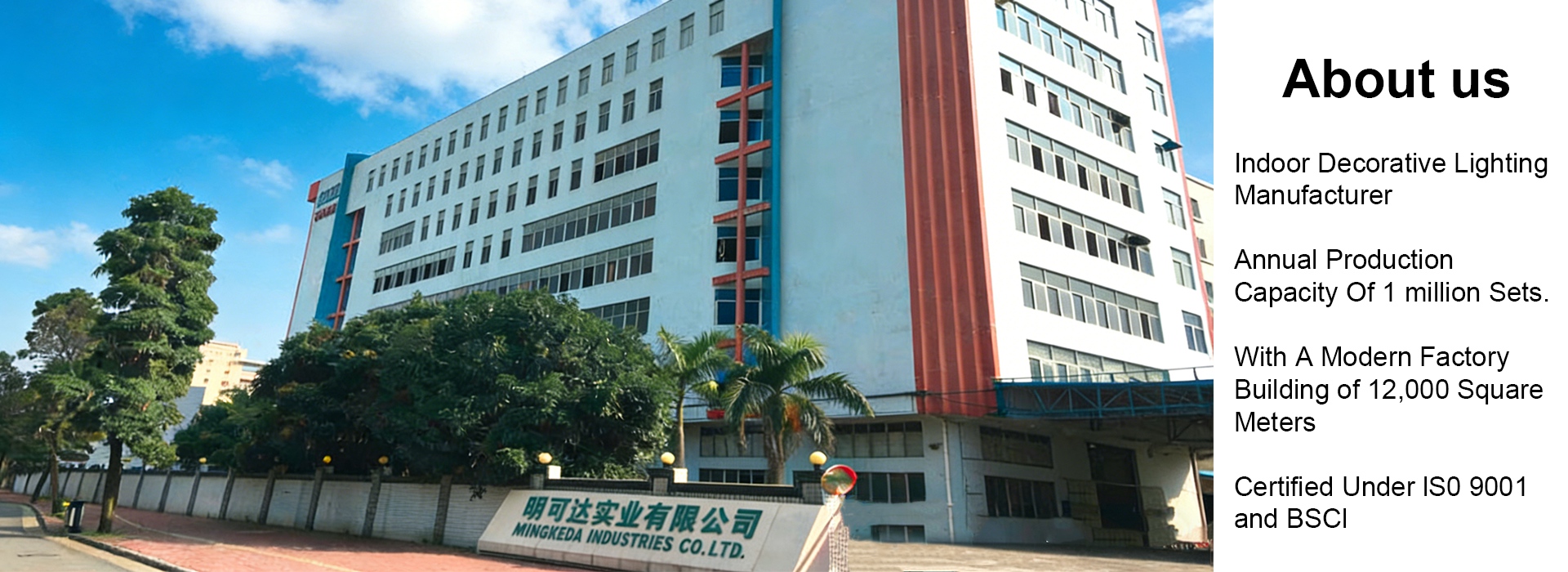
MINGKEDA has clear strengths in this area because its business is built around integrated lighting development and manufacturing. According to its website, the company combines R&D, design, manufacturing, sales, and service in one system. It also operates a dust-free production workshop and offers a broad product range covering desk lamps, bedside lamps, Floor Lamps, ceiling lamps, wall lamps, Pendant Lights, ambient lamps, and other fixtures. Many products hold CCC certification, while some models also have UL, CB, and CE certifications. The company further states that it has more than 41 years of design and production experience in the lighting industry, with OEM and ODM capability across multiple categories.
That manufacturing background matters because LED thermal management lighting is rarely solved by theory alone. It depends on repeated validation through prototype testing, materials selection, structural refinement, and production consistency. A manufacturer with in-house control over design and production is better positioned to optimize heat flow and keep results stable from sample stage to mass production. DOE lifetime guidance also emphasizes that changes in housing, thermal management, assembly methods, light source, or power supply may require requalification, which shows how essential process control is in thermal reliability.
Before selecting a lamp supplier, it helps to review thermal performance from several angles:
| Thermal Factor | Why It Matters | What To Check |
|---|---|---|
| Housing Material | Determines how quickly heat moves away from the LED | Metal structure, thickness, surface area |
| Internal Layout | Affects heat accumulation around chips and drivers | Driver position, PCB spacing, airflow path |
| Heat Sink Design | Supports stable junction temperature | Contact area, structural integration |
| Driver Quality | High temperature can shorten driver life | Operating stability, long-hour test results |
| Product Validation | Confirms real operating reliability | Aging test, temperature test, consistency records |
These points are especially relevant for decorative indoor fixtures where appearance, compact form, and installation conditions can restrict heat release. Strong LED technology should therefore include not only visual design and light effect, but also engineering that protects long-term stability.
In sourcing practice, buyers often focus first on wattage, style, price, and certification. Those points are important, but thermal performance is what helps those advantages last after installation. A visually attractive lamp with poor heat handling may create hidden cost through early lumen drop or driver replacement. A well-built lamp with stable thermal structure is more likely to keep its output, maintain appearance, and reduce maintenance pressure over time.
For this reason, heat dissipation should be treated as a core performance item during evaluation, not a secondary detail. It directly affects reliability, lifespan, and the overall value of the finished lighting product. For manufacturers like MINGKEDA, with integrated development capability, wide decorative lighting categories, and certified production experience, thermal design is part of delivering products that perform steadily in real market conditions.
A lamp is only as dependable as its ability to stay cool under real operating conditions. In LED lighting, thermal control is not hidden engineering in the background. It is one of the foundations of product quality.
Previous: