sam@mkd-led.com
8613794642383



In today’s lighting market, buyers are under pressure to improve product differentiation, control landed cost, shorten development cycles, and keep quality stable across repeat orders. That is why many importers, brand owners, retailers, and project distributors prefer to work directly with an OEM lighting manufacturer instead of adding extra layers between design, production, and delivery. When the factory can manage engineering, sampling, sourcing, production, and inspection in one system, communication becomes clearer and execution becomes more predictable.
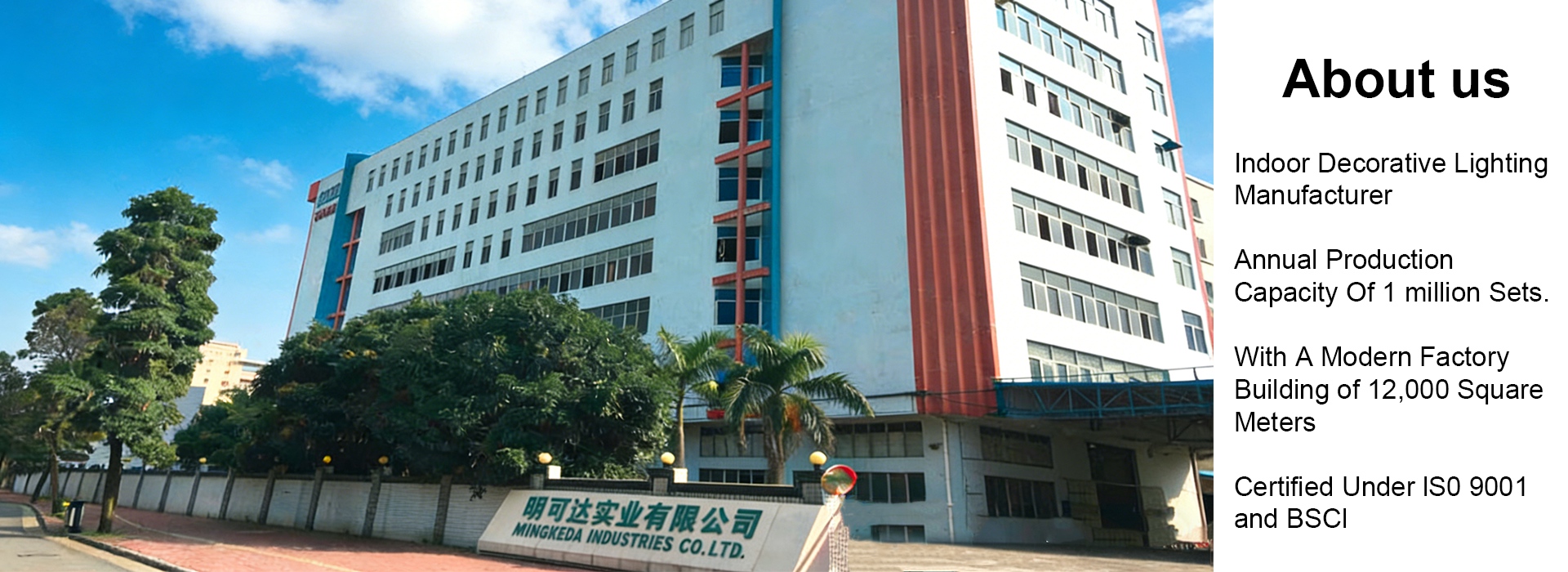
For lighting products, that direct connection matters even more. A lamp is not only about appearance. It also involves structure, electrical safety, light source matching, finish consistency, packaging protection, and compliance for the destination market. MINGKEDA has built its business around this full-process approach. The company has been active in lighting manufacturing since 1984, operates a 12,000 square meter facility in Guangdong, and supports a broad portfolio that includes Table Lamps, Floor Lamps, Wall Lamps, Ceiling Lamps, pendant lights, camping lamps, ambient lamps, and custom lamp development. Its management system is presented as ISO 9001 and BSCI certified, while key products carry certifications such as CE, CCC, UL, and CB.
One major reason buyers choose factory-direct cooperation is cost clarity. When development and production are handled by the same team, it is easier to see where money is going. Material selection, surface finish, structure complexity, packaging method, and assembly time all affect price. A trading chain can blur those details, but a direct factory discussion allows buyers to adjust the product in practical ways without losing the intended design value.
This is especially useful when the target is not simply the lowest price, but better price control. For example, the factory can suggest whether a metal body should be simplified, whether a lamp head can share components with an existing platform, or whether packaging dimensions can be optimized for container efficiency. These changes often reduce total cost without damaging the visual identity of the product. A capable lighting factory can therefore support margin protection in a way that is more technical and more sustainable than repeated price bargaining.
Many lighting buyers do not want an off-the-shelf product that looks the same as hundreds of others in the market. They need private-label collections, region-specific styles, exclusive packaging, or technical adjustments for their sales channels. Working with a custom lighting supplier gives them more room to align product design with real market demand.
At MINGKEDA, customization is part of the visible product strategy. The company lists custom lamps among its product categories and combines R&D, design, manufacturing, sales, and service within one operation. That structure supports faster feedback during development because the same organization can review appearance, material compatibility, certification path, and production feasibility together. For buyers, this reduces the risk of a design that looks attractive on paper but becomes difficult to manufacture at scale.
Speed is one of the most overlooked benefits of factory-direct sourcing. In lighting, market trends change quickly. A new finish, a different shade material, a rechargeable feature, or a packaging update may be needed before the next selling season. If buyers must pass every revision through multiple middle layers, sampling becomes slow and errors multiply.
When a factory already understands its own process limits, it can move from drawing review to sample adjustment more efficiently. That is why many buyers prefer a partner with real engineering and production control. MINGKEDA emphasizes integrated capabilities across R&D, design, manufacturing, and service, supported by more than 200 patents and an experienced team of over 200 employees. Those details suggest stronger internal coordination, which is valuable when timelines are tight and product revisions must be handled accurately.
A low first quote may look attractive, but lighting buyers usually care more about consistency over repeat orders. If color temperature drifts, plating finish changes, dimensions shift, or carton protection is weak, the hidden cost becomes much higher than a small price difference. Returns, customer complaints, and project delays can quickly erase any initial savings.
Factory-direct cooperation helps control those risks because quality expectations can be defined at the source. MINGKEDA states that it operates a dust-free production workshop and follows international management standards. Its certified product portfolio and broad manufacturing scope show that the company is structured for repeatable production rather than one-time opportunistic trading. For buyers, this is critical in categories such as decorative lamps, bedside wall lights, table lamps, and ceiling lights, where both visual consistency and electrical reliability affect sell-through and brand reputation.
Buyers who source lighting year after year often look beyond one order. They need a partner that can support collection expansion, SKU updates, packaging refreshes, and compliance planning across different markets. This is where direct cooperation with an OEM LED lamp manufacturer China becomes a strategic advantage rather than a simple purchasing decision.
A factory with broad product categories can also help buyers extend a successful design language into multiple lamp types. A table lamp program may later expand into wall lamps, pendant lights, or floor lamps using related materials, finishes, and style cues. MINGKEDA’s range across decorative and functional indoor lighting makes that kind of coordinated product planning more realistic. Instead of building every category from scratch with different vendors, buyers can develop a more unified assortment through one experienced production base.
Below is a simple comparison of how direct OEM cooperation often changes sourcing results.
| Sourcing Focus | Working Directly With MINGKEDA | Common Risk In Non-Direct Sourcing |
|---|---|---|
| Product customization | Faster evaluation of structure, finish, packaging, and function | Slower feedback and diluted technical communication |
| Cost control | More visible cost drivers and easier engineering optimization | Less transparency on material and process changes |
| Quality stability | Factory-based standards, certifications, and repeat production control | Greater chance of inconsistency between sample and bulk order |
| Range expansion | Easier to extend one design language across lamp categories | Different suppliers can create mismatch in style and quality |
| Delivery coordination | One team handles design, production, and inspection flow | More handoff points increase delays and errors |
The value of a custom LED lighting factory is not limited to making special products. It also lies in making those products manufacturable, repeatable, and commercially viable after the first sample is approved.
Another reason buyers prefer direct OEM cooperation is communication quality. In lighting projects, details matter. Shade material, lamp body finish, driver position, switch type, wiring method, carton drop resistance, and installation convenience all influence the final result. When the person answering questions is close to the production floor, answers are usually more practical.
That practical communication is one of the strongest advantages in professional lighting manufacturing. Instead of giving generic replies, the factory can explain what will affect mold cost, lead time, assembly efficiency, or export packaging. This helps buyers make faster decisions with fewer surprises later in the order process.
MINGKEDA’s advantage is not based on a single product. It comes from a mature manufacturing foundation combined with a wide decorative lighting portfolio. The company presents more than four decades of experience, an established factory base, an in-house integrated workflow, multiple product certifications, and broad product categories that serve residential, hospitality, and commercial decorative lighting needs. That combination is exactly what many buyers look for when they want to balance customization, quality control, and cost efficiency in one supplier relationship.
Working directly with an OEM manufacturer is ultimately about reducing friction. Buyers gain clearer pricing logic, better sampling efficiency, more realistic customization, and stronger quality control from design stage to shipment. In a competitive market, those advantages help turn sourcing into a more stable and scalable business decision. For companies comparing supply options in decorative and functional LED categories, MINGKEDA offers the kind of integrated factory support that makes long-term product development easier to manage.
Previous: