sam@mkd-led.com
8613794642383



Lighting performance is no longer judged by brightness alone. Buyers now look at power consumption, service life, heat control, maintenance cost, and how consistently a fixture performs across different applications. That is where LED technology has changed the market. Instead of wasting a large share of input power as heat, LEDs convert electricity into usable light far more effectively than traditional sources. The result is lower operating cost, longer product life, and more stable lighting performance in residential, hospitality, retail, and commercial environments. According to the U.S. Department of Energy, LEDs use at least 75 percent less energy than incandescent lighting and can last up to 25 times longer.
For importers, wholesalers, and project buyers, this shift is important because lighting efficiency influences more than the utility bill. It affects fixture temperature, driver reliability, transport value, product positioning, and after-sales pressure. When a lamp delivers more lumens with less wattage, the product becomes easier to market as a practical upgrade rather than only a style item. This is why LED lighting efficiency has become one of the key metrics in product evaluation.
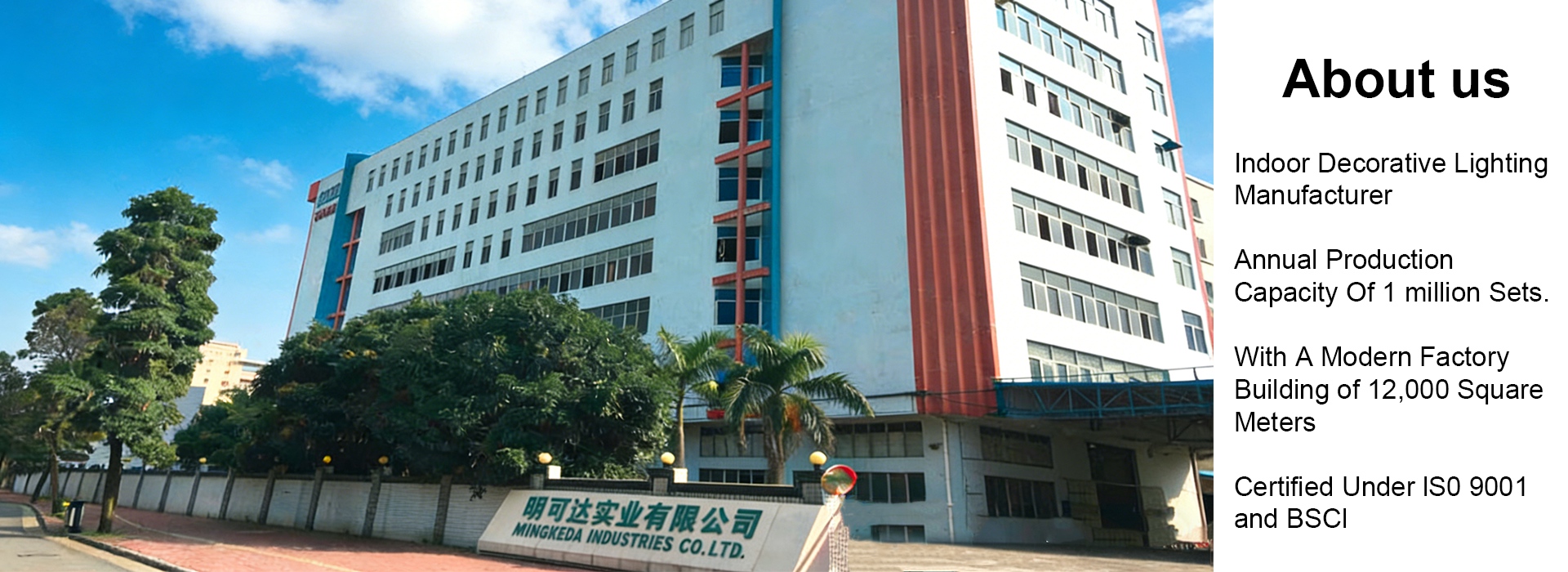
MINGKEDA has built its manufacturing around this direction. Based on its official website, the company operates a 12,000 square meter factory, employs around 200 staff, offers more than 300 products, and supplies a broad range of Table Lamps, Floor Lamps, Wall Lamps, Ceiling Lamps, pendant lights, camping lamps, and ambient lamps. The company also highlights a dust-free workshop and certifications including CCC, with some models also carrying UL, CB, and CE approvals. These strengths matter because efficient lighting is not created by the LED chip alone. It depends on materials, thermal structure, electronics, process control, and product testing working together.
Traditional incandescent lamps create light by heating a filament, which means a large portion of energy becomes heat instead of visible illumination. LED products work differently. They use semiconductor components to generate light more directly, reducing wasted energy and improving efficacy. The U.S. Energy Information Administration noted LEDs at about 83 lumens per watt in one reference comparison, versus around 67 lumens per watt for CFLs, while incandescent products were far lower.
Higher efficacy improves product performance in several ways. First, lower wattage can achieve the same or better light output. Second, less wasted heat helps protect electronic components and housing materials. Third, long operating life reduces replacement frequency. In a sourcing context, those three factors support stronger lifecycle value, especially for product lines used daily in homes, hotels, reading areas, and decorative interior spaces. These are some of the core benefits of LED lighting technology that continue to drive demand worldwide.
Efficiency improves more than energy consumption. It also supports better fixture design. With less heat concentration, manufacturers can build slimmer structures, safer touch surfaces, and more flexible decorative forms. This is especially useful for bedside lamps, desk lamps, wall lights, and ceiling fixtures where thermal balance affects both appearance and durability.
In practical terms, efficient LEDs help maintain more stable lumen output over time. That supports a better user experience in reading, ambient lighting, and long daily operating cycles. MINGKEDA’s product categories reflect these application needs, from eye-care desk lamps and task lamps to ceiling lights, pendant lights, and decorative indoor fixtures. Its wide product coverage gives buyers the advantage of sourcing multiple efficient lighting styles from one manufacturer with a more unified quality standard.
Not every LED fixture performs at the same level. High efficiency LED lamps depend on a complete engineering approach rather than a single selling point.
The LED source and driver must be matched correctly. Stable current control reduces flicker risk, protects lumen consistency, and supports long-term reliability. Poor driver design can reduce real efficiency even when the chip specification looks strong on paper.
Heat still exists in LED fixtures, even if it is much lower than incandescent lighting. Good heat dissipation through metal structures, thermal pathways, and rational housing design helps preserve lumen maintenance and driver life. This is one reason manufacturing experience matters in decorative ceiling lights, desk lamps, and wall lamps.
Efficient lighting must also deliver useful light in the right direction. Diffusers, reflectors, beam distribution, and cover materials affect how much generated light actually reaches the target area. A lamp can have an efficient source but still perform poorly if the optical design wastes output.
Housing materials, wiring quality, soldering consistency, and dust control all influence final performance. MINGKEDA states that it operates a dust-free production workshop and has decades of design and production experience in lighting. For buyers, this suggests a stronger base for controlled assembly and product consistency across repeated orders.
| Lighting Type | Typical Energy Use Trend | Typical Service Life Trend | Heat Output Trend | Sourcing Impact |
|---|---|---|---|---|
| Incandescent | Highest | Shortest | Highest | Frequent replacement and higher operating cost |
| CFL | Moderate | Medium | Moderate | Better than incandescent but limited by design and disposal concerns |
| LED | Lowest | Longest | Lowest among the three | Strong lifecycle value and broader design flexibility |
This comparison aligns with U.S. Department of Energy and Energy Star references showing that LEDs use about 75 percent less energy than standard incandescent models and can last up to 25 times longer.
When comparing lighting products, wattage alone is not enough. A better review method includes lumen output, efficacy, color temperature stability, certification status, driver reliability, and fixture application fit. For a desk lamp, visual comfort and control features matter. For a ceiling light, thermal structure and consistent room illumination matter. For decorative lighting, efficiency must support both aesthetics and long-term durability.
MINGKEDA’s website shows advantages in OEM and ODM supply, broad indoor lighting categories, and certification readiness for different markets. The company also presents experience in table lamps, ceiling lamps, wall lamps, pendant lights, floor lamps, and smart or decorative options. This combination is valuable because buyers often need not just one efficient fixture, but a supplier that can develop a coordinated product line under the same lighting technology framework.
Energy cost pressure, compliance expectations, and consumer preference have all raised the standard for modern lighting products. A fixture that saves power but performs poorly will not stay competitive. A fixture that combines low energy use, stable illumination, attractive design, and long service life will create better market acceptance. That is why energy efficient lighting is now closely tied to product value, not just energy policy.
For manufacturers, the opportunity is to turn efficiency into a complete product advantage. MINGKEDA’s manufacturing scale, diverse catalog, workshop standards, and certification background position it to support this demand across multiple indoor lighting categories. Buyers looking at long-term supply need a partner that understands structure, electronics, appearance, and production consistency together. In modern lighting, efficiency is not a single feature. It is the foundation that supports stronger performance, better reliability, and more competitive products.
Previous: