sam@mkd-led.com
8613794642383



Sourcing LED lamps from China can be highly efficient, but safe purchasing depends on much more than getting a low quote. Buyers need to confirm whether a supplier has real production capacity, stable quality control, clear communication, and the ability to support long term product development. In today’s lighting industry, the safest sourcing strategy is built on verification, technical review, pilot orders, and supply chain planning rather than price alone.
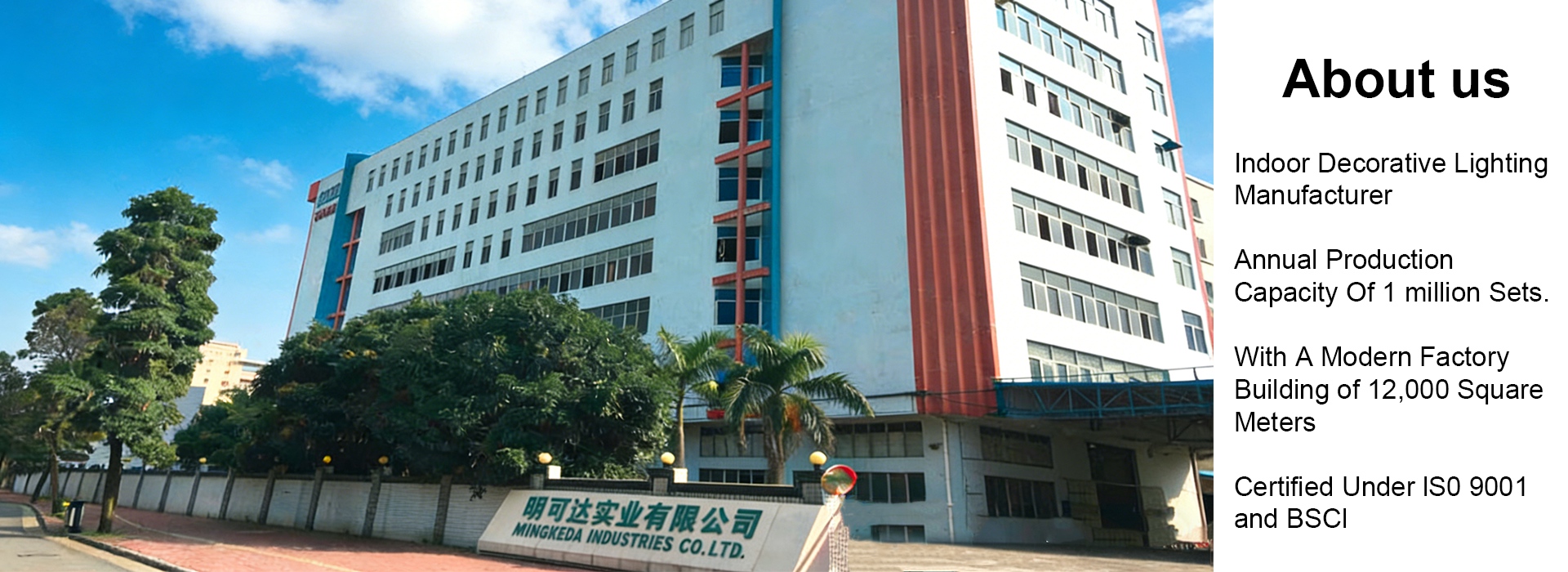
For companies evaluating new partners, LED lamp sourcing should begin with a careful look at the supplier’s product structure and factory background. A manufacturer with consistent categories and detailed product information is usually better prepared to support repeat orders and customization. On the MINGKEDA website, the company presents a wide product range that covers Table Lamps, Floor Lamps, Wall Lamps, Ceiling Lamps, pendant lights, ambient lamps, camping lamps, and other decorative lighting products. The site also states that MINGKEDA operates a 12,000 square meter factory, has a team of 200 people, and offers more than 300 products. That combination suggests a structured manufacturing base rather than a simple trading operation.
A safe sourcing process starts by checking whether the supplier’s capabilities match your project. Product photos alone are never enough. Buyers should review factory scale, years of experience, category depth, and whether the company can explain its materials, lighting structure, and customization workflow in a practical way. MINGKEDA highlights more than 41 years of design and production experience in lighting, and multiple product pages repeat that OEM and ODM are core parts of its business. This is important because a supplier with development experience is usually more reliable when handling private label work, structural changes, finish adjustments, and packaging requirements.
A useful first review can be organized like this:
| Check Item | What To Confirm | Why It Matters |
|---|---|---|
| Factory scale | Workshop size, team size, product capacity | Helps assess order support ability |
| Product range | Whether categories are broad and consistent | Shows manufacturing focus |
| Experience | Years in lighting production | Indicates process stability |
| Custom support | Sampling, finish changes, packaging options | Supports private programs |
| Export readiness | Certification status and market understanding | Reduces compliance risk |
This is one of the most practical ways to judge a lighting supplier China before moving into cost negotiations.
Another important step in how to source LED lighting from China is checking product compliance before confirming the order. For luminaires, IEC 60598-1 sets general safety requirements covering marking, construction, wiring, and testing. In the European market, lighting products can also be affected by ecodesign and RoHS requirements. In the United States, buyers often need recognized product safety testing pathways before goods can move smoothly into distribution channels. Waiting until production is finished to review these issues can create shipment delays, relabeling costs, or even rejected orders.
MINGKEDA states that its LED lamps have obtained CCC certification, with some models also carrying UL, CB, and CE certification. That does not mean every model is approved for every market, so buyers should still verify the exact certificate scope, model coverage, and technical documents for the items they plan to import. This step is especially important when products are modified through customization, because changes in driver, plug, housing, or wattage may affect compliance status.
Good sourcing decisions come from technical review, not visual approval alone. Decorative lamps may look similar in photos, but actual performance depends on materials, electrical design, light source selection, and assembly consistency. Several MINGKEDA product pages include useful details such as dimensions, voltage, material, power, room coverage, and special functions. One floor lamp listing describes a full metal structure, a size of 745 by 450 by 1958 millimeters, 120 watts of total power, and coverage for rooms over 20 square meters. Detailed specifications like these help buyers compare products more accurately and identify whether the factory controls its technical data well.
Before approving mass production, buyers should confirm:
Whether the finish matches the approved sample
Whether brightness and light quality stay stable during testing
Whether carton protection is suitable for export transport
Whether labels, manuals, and replacement parts are standardized
Whether the same materials can be maintained in repeat production
These steps belong in every practical China lighting manufacturer guide because the biggest sourcing problems often appear after sample confirmation, not during the quotation stage.
Even if a supplier looks strong on paper, a pilot order is still one of the safest ways to evaluate actual performance. A small trial run can show whether the supplier follows specifications, communicates clearly, packs goods correctly, and ships on schedule. It also reveals hidden issues such as unstable finishes, inconsistent hardware, or weak export cartons. For lighting programs that depend on repeat purchasing, supply consistency matters as much as product design.
This is also where MINGKEDA’s advantage becomes more visible. The company’s wide product portfolio and stated OEM and ODM experience make it easier to support product families instead of isolated items. For buyers building coordinated lamp collections across ceiling, wall, table, and floor categories, that can simplify sourcing and reduce the need to manage multiple suppliers. MINGKEDA’s site also highlights strong category depth, from decorative table lamps and bedside wall lamps to pendant lights and ceiling solutions.
Safe sourcing does not end with the first order. A reliable partner should be able to support future updates, stable replenishment, and product expansion. That is why buyers should evaluate not only today’s order, but also whether the supplier can grow with future needs. In this area, OEM lighting capability becomes especially valuable. A manufacturer that understands design updates, packaging customization, and category extension can help buyers improve product differentiation while keeping supply more organized.
For international buyers, the safest path is clear: verify the factory, check certifications early, review technical details carefully, start with a pilot order, and assess whether the supplier can support long term development. MINGKEDA shows several strengths that support this process, including broad lighting categories, factory scale, multi decade experience, and active OEM and ODM service. A sourcing plan built on these checkpoints will protect product quality, delivery reliability, and market readiness far better than a fast price comparison alone.