sam@mkd-led.com
8613794642383



Choosing the right lamp size for a reading table is not only about appearance. The lamp has to match the table width, the reading distance, the needed brightness, and the way light lands on the page. A lamp that is too small often leaves the book area dim. A lamp that is too large can create glare, wasted space, and visual imbalance. For reading, the better approach is to match lamp scale with task lighting performance, not just decoration. Guidance used in office and reading environments commonly places task lighting around 500 lux, while general surrounding light is often lower, around 300 lux. That difference is important because reading needs focused light on the work surface rather than only ambient brightness.
For most reading tables, the lamp base should occupy only a modest part of the tabletop so there is still room for books, a cup, a notebook, or charging items. A practical rule is to keep the lamp base width at about one third or less of the table width. On a small bedside table around 40 to 50 cm wide, a slim lamp works better than a wide decorative base. On a larger side table around 60 to 80 cm wide, the lamp can be visually fuller, but it should still leave a clear reading zone. The goal is stable placement and clean light distribution rather than oversized volume.
Lamp height matters just as much. For reading beside a chair, sofa, or bed, the light source should sit high enough to spread light across the page but low enough to avoid direct glare to the eyes. In many projects, a Table Lamp height around 45 to 65 cm fits common reading tables well. When the table is used for focused reading, a directional head or adjustable arm improves usability more than simply increasing lamp size.
When buyers compare lamps for reading, lumens are more useful than watts. The U.S. Department of Energy and the FTC both emphasize that lumens measure brightness, while watts measure energy use. ENERGY STAR guidance shows that traditional 40 watt, 60 watt, 75 watt, and 100 watt equivalents correspond to about 450, 800, 1,100, and 1,600 lumens. For a reading table, that means many projects will perform well in the lower to middle part of that range, depending on shade design, beam control, and distance from page to lamp.
Because the target at the reading surface is usually around 500 lux, a compact table lamp for reading often works best when the effective light output is roughly in the 450 to 800 lumen class, especially when the shade directs light downward efficiently. This is an engineering judgment based on the lumen guidance above and the 500 lux task reference, so final selection should still consider shade transmission, mounting height, and table depth.
Light color changes the reading experience. ENERGY STAR guidance places warm tones around 2200K to 3000K, neutral to cool white around 3500K to 4100K, and daylight tones up to 5000K and beyond. The same guide identifies 5000K as good for reading, while 3500K to 4100K suits kitchens and workspaces. For most indoor reading tables, 3000K to 4000K is usually the most balanced choice because it supports clarity without making the space feel too cold. For more focused task reading, 4000K is often a strong option.
This is one reason adjustable LED table lamps are valuable in modern product lines. A lamp that combines suitable size with dimming or a well-selected fixed color temperature is easier to place across bedrooms, study corners, guest rooms, and hospitality settings.
| Table width | Suggested lamp height | Suggested visual style | Suggested light output |
|---|---|---|---|
| 40 to 50 cm | 38 to 50 cm | Slim base, narrow shade | 450 to 600 lumens |
| 50 to 65 cm | 45 to 60 cm | Balanced base and shade | 500 to 800 lumens |
| 65 to 80 cm | 50 to 65 cm | Wider decorative form with controlled light | 600 to 1,100 lumens |
These ranges are practical specification guidance based on common reading-table proportions, standard lumen references, and task illuminance targets. Final dimensions should be checked against the actual table depth, user eye level, and shade geometry.
A common mistake is choosing a decorative lamp that looks attractive in a catalog but throws light sideways instead of onto the page. Another is selecting a lamp with a very broad shade for a narrow table, which reduces usable space. Some buyers also overfocus on wattage and underfocus on beam control, dimming, glare, and color temperature. For reading applications, the lamp should first deliver stable, localized illumination, then fit the room style.
A well-designed led bedside table lamp solves this problem by combining compact dimensions with controlled output. On smaller bedroom tables, this type of lamp usually performs better than oversized decorative pieces because it preserves tabletop space and supports clearer near-field lighting.
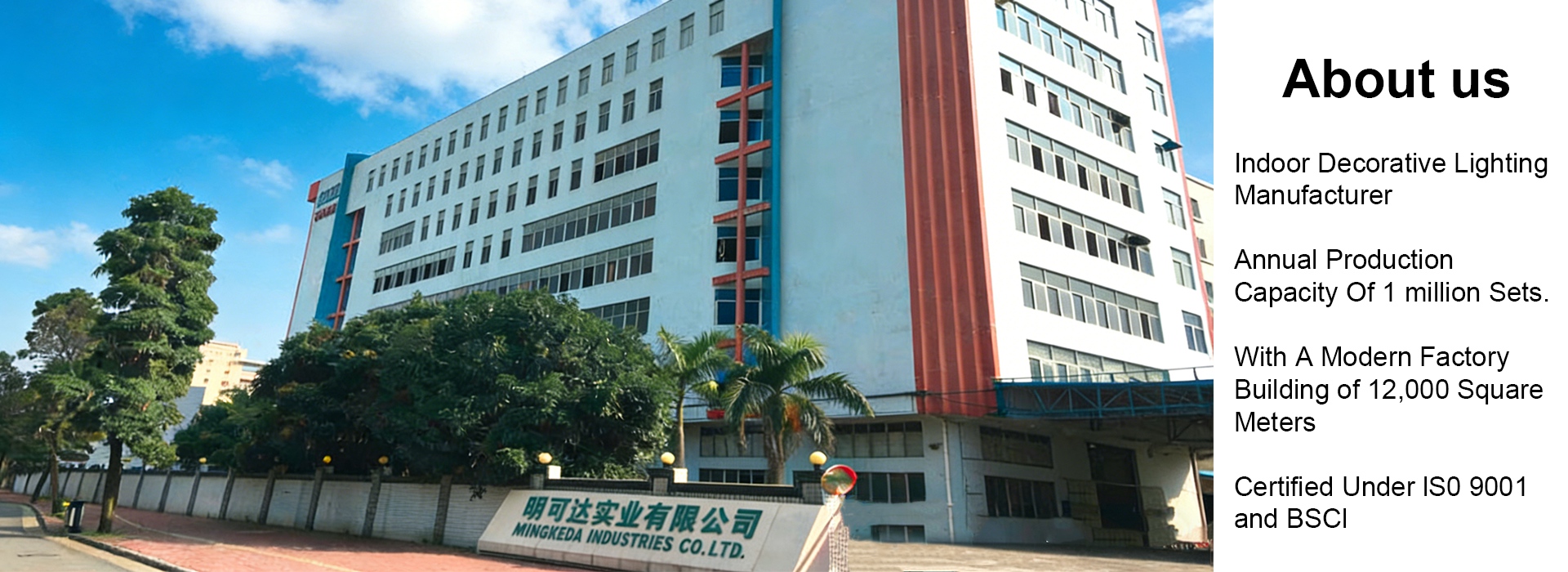
For project supply, the right reading lamp must balance appearance with production consistency. MINGKEDA positions itself as an integrated lighting manufacturer with a 12,000 square meter facility, more than 200 employees, ISO 9001 and BSCI management systems, and more than 200 patents. Its key products also include certifications such as CE, CCC, UL, and CB on relevant models, which helps support export and project compliance needs. The company’s product range covers table lamps, Floor Lamps, Wall Lamps, Ceiling Lamps, camping lamps, ambient lamps, and custom lamps.
That manufacturing background matters for reading lamps because good sizing decisions depend on repeatable structure. Base weight, arm balance, shade proportions, switch design, and driver stability all affect how the lamp performs on an actual table. MINGKEDA’s task-lamp category shows this practical approach. One reading model uses a 6W LED light source at 4000K and a 180 degree folding arm, combining compact size with task-focused usability. Its bedside category also highlights touch-control solutions for bedrooms, where limited tabletop space makes lamp scale especially important.
For buyers developing bedroom and reading collections, a led bedside table lamp should not be selected by body height alone. The better standard is whether the lamp can deliver enough task light, fit the tabletop comfortably, and maintain a clean visual proportion in repeated production.
The best reading lamp size is the one that fits the table and delivers the right light exactly where reading happens. In most cases, that means a lamp height of about 45 to 65 cm, a compact base that does not crowd the tabletop, and light output strong enough to support about 500 lux on the reading surface. A color temperature between 3000K and 4000K is often the most versatile, while more task-focused applications may lean toward 4000K or higher. With strong manufacturing depth, broad decorative lighting experience, and reading-oriented product development, MINGKEDA is well positioned to supply lamp solutions that combine visual balance, stable quality, and practical reading performance.
Previous: