sam@mkd-led.com
8613794642383



Choosing the right wattage for a reading lamp is less about chasing a high number and more about delivering the right light level to the page. For modern LED products, most reading lamps work well in the 5W to 12W range, while stronger task lighting for large desks, dual-use study areas, or more demanding visual tasks often falls between 10W and 15W. The better question is not simply how many watts a lamp uses, but how many lumens it delivers, how evenly it spreads light, and how well it controls glare. The U.S. Department of Energy notes that lumens measure brightness while watts measure energy use, and it also states that LED lighting uses at least 75 percent less energy than incandescent lighting while lasting up to 25 times longer.
For reading, the target is usually a comfortable task-lighting zone rather than maximum output. In practical terms, many reading environments perform best when the work surface receives around 300 to 500 lux, and detailed tasks may call for even higher levels when ambient lighting is weak. This is why a 6W lamp can be fully adequate in one setting while a 12W lamp may still feel dim in another if the beam angle is too wide, the light source is too high, or the surrounding room is underlit. Task lighting guidance widely used in the industry places desk and reading activities in this moderate illuminance range, which explains why wattage alone is never the whole answer.
In traditional lighting, buyers often judged brightness by wattage because incandescent lamps converted much of their energy into heat. LED lighting changed that logic. A modern LED product can produce useful reading brightness at a fraction of the power draw. The U.S. Department of Energy explains that buyers should choose light by lumens, not by watts, and notes that a lamp around 1,100 lumens can replace what many people once expected from a 75-watt incandescent source. DOE materials also describe LED technology as highly efficient, with specialized products reaching 150 lumens per watt or more.
That means a reading lamp rated at 7W to 10W can already provide strong and useful output when the optical design is efficient. In broad market terms, many LED products in the 800 to 1,100 lumen range can be powered within that band, depending on chip quality, driver efficiency, thermal design, and diffuser losses. This is why procurement decisions should compare wattage with lumen output, beam control, color quality, dimming behavior, and expected lifetime rather than using watts as the main benchmark.
The table below gives a practical selection reference for reading and desk use.
| Use scenario | Typical LED wattage | Approximate output goal | Suggested result |
|---|---|---|---|
| Bedside casual reading | 4W to 6W | 300 to 500 lumens | Soft and efficient for short reading sessions |
| Standard book reading at desk | 6W to 8W | 500 to 700 lumens | Balanced brightness for daily reading |
| Student study lamp | 8W to 12W | 700 to 1,000 lumens | Better for longer sessions and denser text |
| Drafting, note-taking, detailed paperwork | 10W to 15W | 900 to 1,100 lumens | Stronger task lighting with better visual clarity |
| Large worktop with weak ambient light | 12W to 15W | 1,000 lumens and above | Useful when one lamp supports a wider area |
These ranges align with the wider LED efficiency shift described by the Department of Energy and with common task-lighting expectations in the 300 to 500 lux range for reading and desk work. They also reflect why many successful reading products today no longer need high wattage to achieve comfortable visibility.
A reading lamp can be bright enough on paper but still feel tiring if its light quality is poor. Comfort depends on several linked factors. First is uniformity. A concentrated hot spot in the center with weak edge illumination causes repeated pupil adjustment. Second is glare control. When the light source is directly visible, visual comfort drops quickly, even if the wattage is moderate. Third is color temperature. Many users prefer warmer light for relaxed evening reading and more neutral white light for study or paperwork. Fourth is flicker performance. Poor driver design can create subtle instability that is not always obvious at first glance but affects long reading sessions.
This is where a well-designed led eye protection desk lamp stands apart from a basic lamp. Eye-care positioning is not just a marketing phrase when it is backed by dimming control, anti-glare optical structure, stable current output, and a suitable color temperature range. On the MINGKEDA site, its eye-care desk lamp line highlights flicker-conscious, glare-free illumination and models with color temperature adjustment from 3000K to 6000K, touch dimming, and reading-focused functionality. Those details matter because the same wattage feels very different when the optical and driver systems are better engineered.
For a bedside lamp used mainly for paperback reading before sleep, a 4W to 6W LED lamp is often sufficient when the beam is focused and the distance to the page is short. For a study desk where reading is mixed with writing and screen use, 6W to 10W is a safer range because the lamp must cover a broader work area. For professional or educational settings where visual tasks continue for extended periods, 8W to 12W is usually the more reliable selection band. In environments with darker wall finishes, larger desktops, or reduced general room lighting, the upper end of that range is often more practical.
Lamp geometry also changes the wattage requirement. A close-position reading lamp with an adjustable arm can achieve the target lux level with less power than a fixed decorative lamp placed farther away. MINGKEDA’s catalog includes eye-care desk lamps, task lamps, bedside lamps, and cordless rechargeable Table Lamps, which is useful because different reading scenes need different delivery methods rather than one universal wattage. A bedside reading corner, a hotel guestroom desk, and a student study station do not perform the same way even when the nominal watts are identical.
When product pages say only 5W, 8W, or 12W, buyers still do not know enough. A more complete specification helps buyers judge fit for project use and reduces mismatch after delivery. A reading lamp should ideally declare at least the following: lumen output, color temperature range, dimming steps, beam behavior, color rendering level, driver stability, and expected service life. The Department of Energy explains clearly that lumens are the measure of how much light users actually receive, while watts only show power consumption. In procurement terms, lumen-based communication lowers ambiguity and improves product comparison across models.
For this reason, a reading-lamp quotation that states 8W LED, 700 lumens, 3000K to 5000K, low-glare diffuser, touch dimming is more commercially useful than one that states only 8W reading lamp. It gives a clearer picture of application suitability and expected user experience. It also supports more efficient specification work for retail programs, hospitality supply, educational projects, and OEM development.
For most reading lamp programs today, a practical default target is:
6W to 10W LED
500 to 800 lumens
adjustable color temperature
dimming control
glare-managed optical output
stable driver performance
This range suits the majority of personal reading and light study tasks without unnecessary energy use. It also aligns with the broader shift toward high-efficiency LED lighting described by DOE and ENERGY STAR materials. ENERGY STAR documentation has long emphasized the difference between brightness and electricity use, while DOE points to major energy reductions and long service life as central LED advantages.
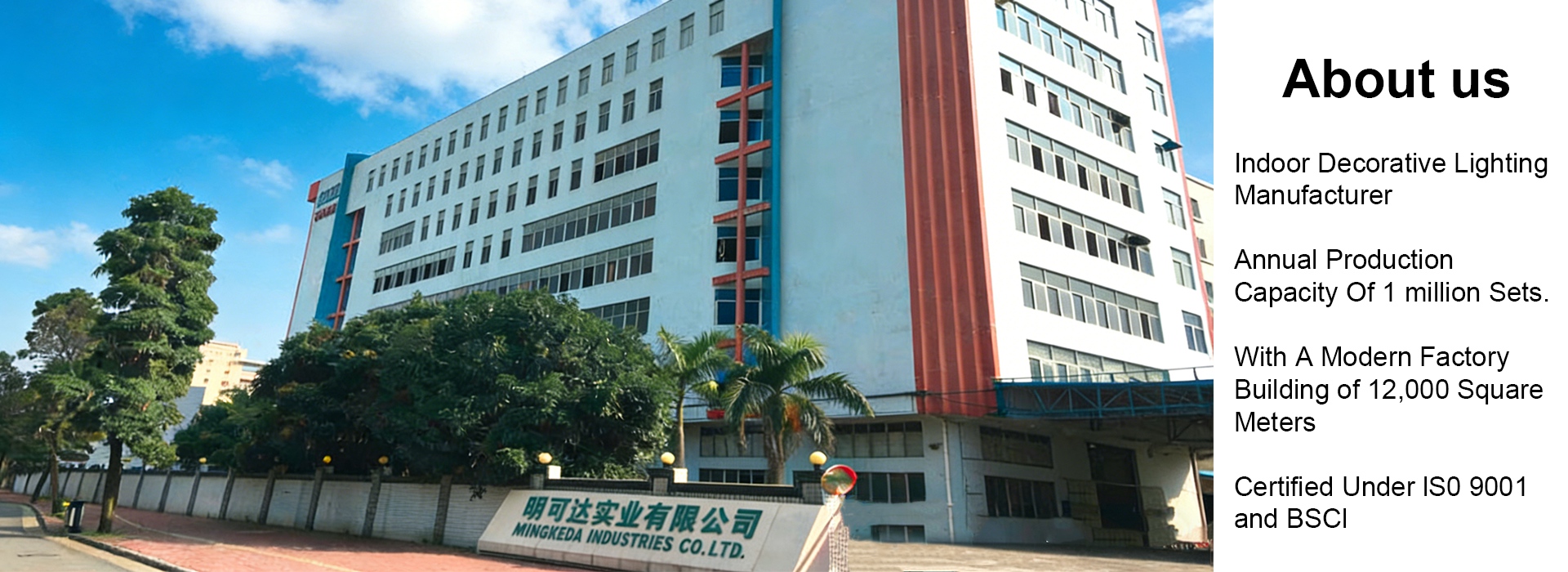
MINGKEDA is positioned as a dedicated LED lighting manufacturer with a broad product base that includes eye-care desk lamps, task lamps, bedside lamps, Floor Lamps, Wall Lamps, Ceiling Lamps, camping lamps, ambient lamps, and decorative lighting. On its official website, the company states that it operates a 12,000 square meter factory, has a workforce of 200, and has built a dust-free production workshop. It also notes that its LED lamps have obtained CCC certification, with some models also carrying UL, CB, and CE approvals. For buyers evaluating reading lamp supply, these points matter because lighting performance depends not only on industrial design but also on production control, component consistency, and compliance readiness.
The MINGKEDA range is also useful from a development perspective. Its eye-care models include features such as 12W LED lamp beads, 3000K to 6000K color temperature adjustment, touch dimming, and reading-oriented anti-glare positioning. That allows specifiers to choose different wattage and control combinations for different sales channels without moving away from one manufacturing platform. For a project that wants a refined led eye protection desk lamp program, that flexibility can simplify product line planning.
One common mistake is choosing the lowest wattage simply to reduce power consumption. If the lamp then fails to achieve the desired lux level on the page, users compensate by leaning forward or bringing the lamp too close, which reduces comfort. Another mistake is choosing excessive wattage in a small reading zone. When brightness is too strong and dimming is unavailable, glare increases and the reading experience becomes harsher than necessary. A third mistake is ignoring the room context. Dark furniture, deep shades, frosted covers, and high mounting positions can all increase the lumen requirement even when the task itself stays the same.
A final mistake is assuming that every reading lamp should be designed around the same target. In reality, a rechargeable restaurant table lamp, a hotel bedside reading light, and a student desk lamp belong to different performance categories. MINGKEDA’s catalog shows these distinctions clearly through separate product groups for task lamps, eye-care desk lamps, bedside lamps, and cordless rechargeable table lamps, which is exactly how reading-light procurement should be approached.
So, how many watts should a reading lamp be? For most modern LED products, the most practical answer is 5W to 12W, with 6W to 10W covering the majority of comfortable reading applications. For more demanding desk work or larger work surfaces, 10W to 15W may be appropriate. Still, the best specification is never wattage alone. A strong reading lamp should combine the right watts with the right lumens, glare control, color temperature, dimming, and stable driver performance. For manufacturers and buyers alike, that is the standard that creates a reading lamp that is efficient on paper and comfortable in real use.