sam@mkd-led.com
8613794642383



Choosing LED products only by price or appearance often leads to hidden risks. In real projects, weak drivers, unstable chips, poor heat dissipation, and inconsistent assembly can shorten service life and raise maintenance costs. A reliable purchasing decision should start with a clear method for checking LED lighting quality through material inspection, verified performance data, and recognized LED testing standards. The U.S. Department of Energy notes that quality LED products can use at least 75 percent less energy and last up to 25 times longer than incandescent lighting, which shows why proper evaluation before buying matters so much.
A practical review begins with the physical build of the lamp. Lamp material quality affects durability, safety, appearance retention, and thermal stability. For metal housings, buyers should check thickness consistency, surface treatment uniformity, and resistance to corrosion. For plastic parts, focus on heat resistance, dimensional stability, and whether the material feels brittle or too light for the fixture type. A well-made luminaire should have smooth edges, tight assembly joints, stable mounting points, and no obvious color mismatch between components.
The heat sink is especially important. In LED lighting, temperature directly influences lumen maintenance and driver reliability. A lamp with a larger and better-designed thermal path usually performs more consistently over time. Buyers should also inspect wire routing, soldering neatness, diffuser quality, and lens clarity. If the diffuser is too thin or poorly molded, light distribution can become uneven and visual comfort may drop. These are small details, but they often reveal whether a lighting supplier is managing production with discipline or simply assembling low-cost parts.
Many catalogs describe lamps as bright, efficient, or long-lasting, but good procurement depends on measurable values. The first numbers to request are luminous efficacy, lumen output, color temperature consistency, color rendering data, power factor, and lifetime statement. A product that looks similar on the outside may perform very differently once installed.
The most useful performance review should include the following:
| Parameter | What To Check | Why It Matters |
|---|---|---|
| Lumen output | Whether delivered lumens match the application target | Prevents under-lighting or over-specification |
| Luminous efficacy | Lumens per watt under tested conditions | Helps compare energy performance |
| CCT consistency | Stable color temperature across batches | Reduces visible color difference in projects |
| Color rendering | CRI and preferably TM-30 data | Improves visual quality of objects and interiors |
| Power factor | Stable electrical performance | Important for commercial installations |
| Lifetime basis | Clear test method behind the claim | Avoids inflated service life statements |
For color quality, CRI is still widely used, but it should not be the only reference. The Illuminating Engineering Society describes TM-30 as a more robust method for evaluating color rendition, using metrics such as color fidelity and gamut. That makes it valuable when appearance, merchandising, hospitality, or decorative lighting quality is important.
One of the best answers to how to test LED lamp quality is to review whether the product is supported by recognized test methods instead of self-declared claims. For finished luminaires and integral lamps, LM-79 is a key method because it measures electrical and photometric performance of the complete product. For LED packages, arrays, and modules, LM-80 focuses on lumen maintenance over time. TM-21 is then used to project useful lifetime based on LM-80 data. The IES identifies these methods as part of its core measurement and testing standards for lighting products.
This distinction is important because some suppliers quote long lifetime figures without showing the basis. A lifetime claim is more credible when it is linked to component testing, thermal control, and a transparent calculation method. Buyers should therefore ask:
Is the photometric report based on LM-79 for the complete lamp
Are the LED source data supported by LM-80
Is the lifetime projection linked to TM-21
Are safety and certification files available for the target market
These questions help confirm whether the stated LED lamp quality standards are backed by real documentation.
In many failed lamps, the main issue is not the LED chip itself but the system around it. Poor driver selection can cause flicker, unstable current, early failure, or weak surge resistance. Weak thermal design can accelerate lumen depreciation and reduce driver life. This is why two products with the same wattage and similar appearance can perform very differently in the field.
A useful sample check includes running the lamp continuously, reviewing case temperature, observing light stability, and checking whether brightness drops noticeably after warm-up. For demanding projects, it is reasonable to ask for aging test records, driver brand information, surge protection level, and production inspection data. Quality-oriented manufacturers usually have this information ready because they already use it internally for process control.
Project buyers often face a problem that is less visible in a single sample: batch inconsistency. One sample may look good, but large orders can show color shift, brightness variation, or assembly defects if production control is weak. A dependable supplier should be able to explain incoming material inspection, in-process checks, aging procedures, and final sampling rules.
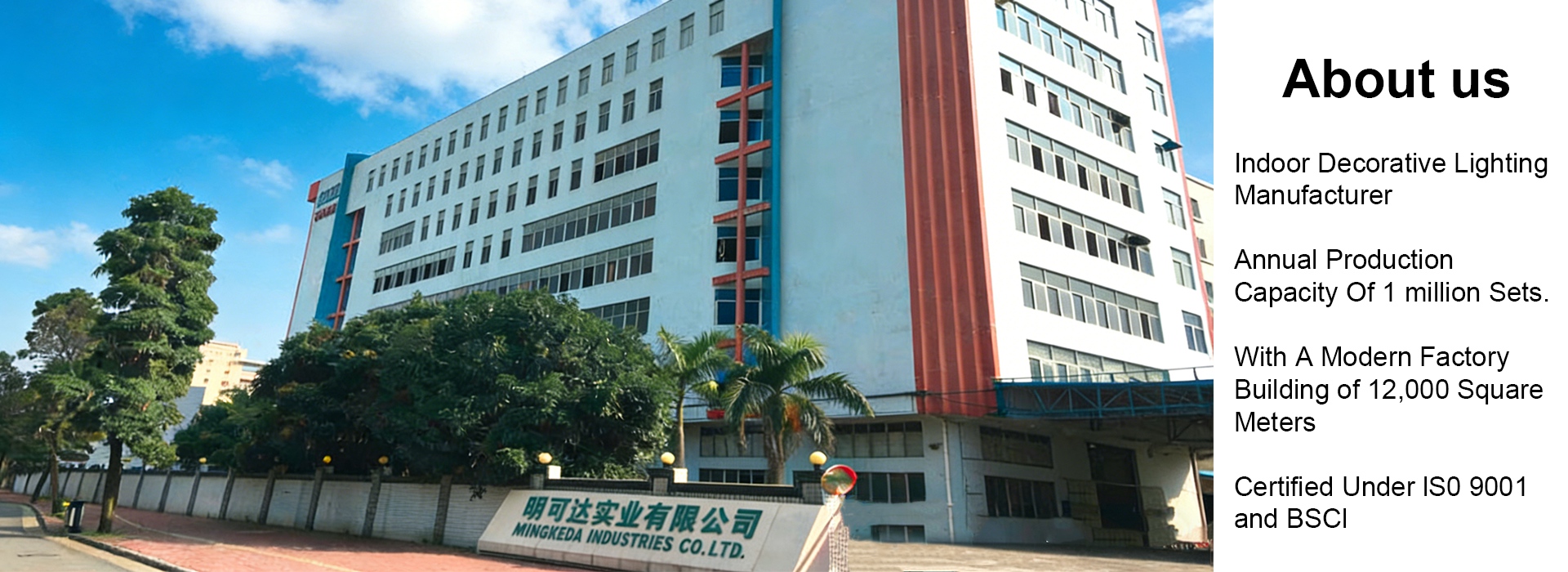
This is also where manufacturer strength matters. According to Mingkeda’s official company information, the company operates a 12,000 square meter factory, employs a team of around 200 people, and states that it has established a dust-free production workshop. Its product range covers Table Lamps, Floor Lamps, Wall Lamps, Ceiling Lamps, pendant lights, and other LED lighting categories, with some models carrying certifications such as CCC, UL, CB, and CE. These details matter because stable production conditions and certification experience usually support better consistency, documentation, and order control.
Before placing an order, a buyer can use this simple method to judge LED lighting quality in a more professional way:
Inspect housing, diffuser, heat sink, wiring, and finish quality
Review LM-79 performance data for the complete product
Ask whether LM-80 and TM-21 support the lifetime claim
Confirm color rendering information and request TM-30 data when color accuracy matters
Check certifications required by the destination market
Compare multiple samples from different production batches
Review aging tests, driver specifications, and quality control records
This approach reduces the chance of buying lamps that look acceptable in photos but fail under real operating conditions.
A good lamp is not created by one strong component alone. It comes from the combination of material selection, engineering design, testing discipline, and repeatable manufacturing. That is why supplier evaluation should go beyond catalog images and headline pricing. A capable manufacturer can explain not only what the product is, but why it performs consistently.
For buyers who need dependable decorative or commercial lighting solutions, Mingkeda’s advantage is not only product variety. It is the ability to combine manufacturing scale, workshop control, certification support, and broad category experience into a more stable supply process. In procurement, that kind of transparency is often the difference between a product that performs in testing and a product that performs in the market.
Knowing how to test LED lamp quality before buying helps avoid costly mistakes after installation. Focus on lamp material quality, verified photometric data, thermal design, driver reliability, and recognized LED lamp quality standards. When these elements are checked together, LED testing becomes a practical purchasing tool rather than a technical formality. For projects that require stable quality, long-term consistency, and support from an experienced lighting supplier, Mingkeda offers a stronger foundation for confident sourcing decisions.
Previous: