sam@mkd-led.com
8613794642383



Choosing the right LED Table Lamp supplier is not only about getting a competitive price. For indoor lighting projects, the real difference often appears later, when products enter retail channels, project delivery schedules tighten, or after-sales issues begin to surface. A reliable supplier should be able to support stable quality, consistent design, clear testing records, and smooth export execution from the first sample to bulk shipment.
For LED table lamps, this matters even more because buyers are not only sourcing a decorative item. They are sourcing an electrical product that combines light quality, structural safety, driver stability, appearance, and long-term performance. In many markets, portable luminaires are evaluated against standards such as IEC 60598 and UL 153, while LED performance expectations are often tied to benchmarks such as 15,000-hour rated life and CRI 80 for interior lighting quality.
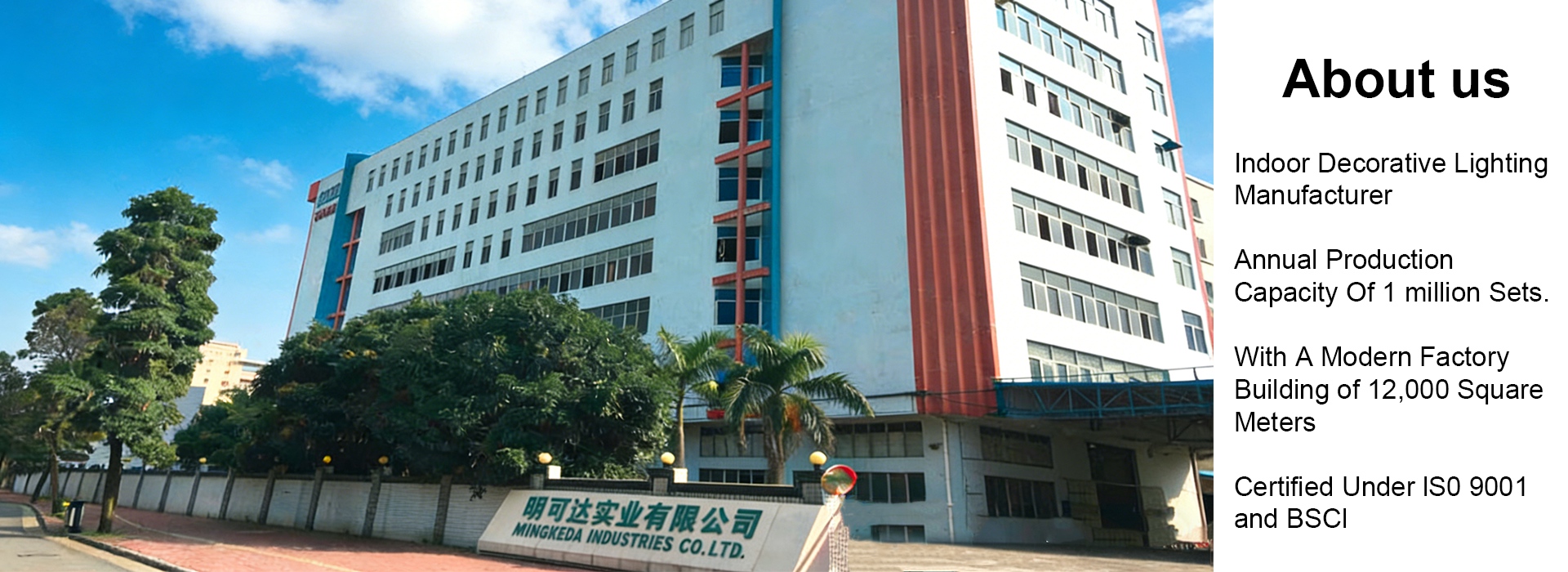
A dependable lighting factory should show evidence of real manufacturing capability rather than relying only on a polished catalog. When you evaluate a supplier, ask how much of the development and production process is handled in-house. A supplier with its own engineering, sampling, assembly, and inspection workflow is usually better prepared to control lead time, maintain consistency, and respond to design changes quickly.
Mingkeda presents a strong advantage here. According to its official product pages, the company has more than 41 years of design and production experience in the lighting industry, supports OEM and ODM projects, and completes the process from design drawing to final sample within its own factory. The company also states that it has developed indoor decorative lamps and battery table lamps over a long production history, which is highly relevant when selecting a custom table lamp manufacturer for indoor lighting programs.
Many sourcing problems begin when testing is treated as a final step instead of a daily control method. A reliable LED lighting supplier should be able to explain what it tests, when it tests, and how it records the results. For LED table lamps, this normally includes electrical safety, light output stability, color consistency, structural reliability, and aging performance.
Mingkeda states that its Eye-Care Desk Lamps undergo different tests to verify long-term usability and reduce unnecessary eye stress. The company also says it has conventional safety testing equipment and applies quality control from raw material procurement to finished product delivery. This is a positive sign because LED lamp reliability depends on the full system, not only on the LED chip. The U.S. Department of Energy has noted that lumen maintenance alone does not cover failures in drivers, optics, electronics, mechanics, or thermal management, which is why complete product testing matters in supplier selection.
A qualified supplier should not only copy popular models. It should also understand how to turn trend direction, material choice, and user needs into manufacturable products. For table lamps, design capability affects more than appearance. It influences packaging size, assembly efficiency, stability, light distribution, and cost control.
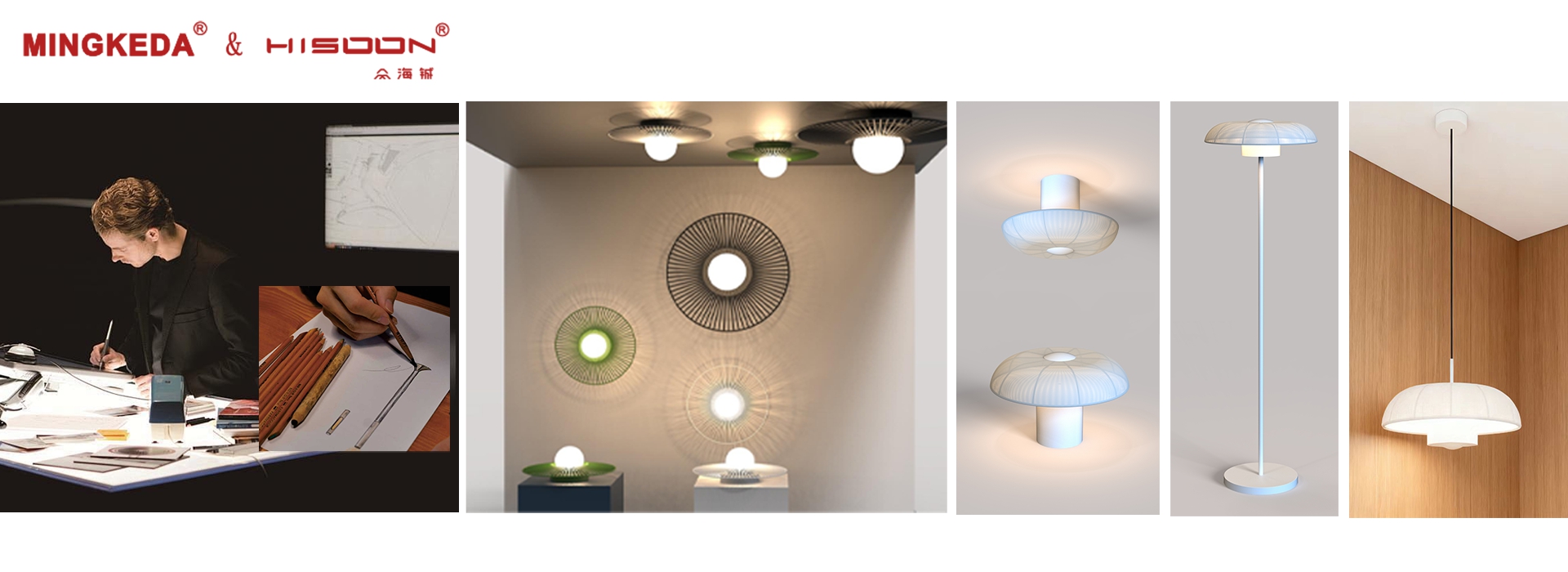
Mingkeda highlights a complete new-product development process covering appearance, size, color matching, structure, and process engineering. The company also notes that at least 70 percent of its new designs are well received by customers. While design success always depends on market fit, this shows that Mingkeda is not limited to standard catalog supply. That is especially valuable for buyers looking for a bulk LED table lamp supplier that can support differentiated collections rather than simple price competition.
A supplier may have good products but still fail on delivery discipline. For purchasing teams, export experience is often visible in three practical areas: sample responsiveness, mass production timing, and workable order thresholds.
Mingkeda’s published FAQ states that samples typically require 7 to 14 days, first-order mass production about 60 days, repeat orders about 45 days, and MOQ levels around 50 to 500 pieces depending on the light. These details are useful because reliable export suppliers usually publish operational boundaries clearly instead of keeping everything vague until negotiation. In supplier evaluation, that level of transparency helps reduce project risk and improves planning for launch schedules and replenishment.
| Evaluation Item | What To Check | Why It Matters |
|---|---|---|
| Production scale | In-house sampling, assembly, engineering support | Better control over quality and lead time |
| Testing process | Safety tests, aging tests, parameter verification | Reduces failure risk after shipment |
| Design capability | OEM and ODM support, new product workflow | Helps build differentiated indoor lighting lines |
| Export experience | Sample timing, mass lead time, MOQ clarity | Improves purchasing predictability |
| Standards awareness | IEC 60598, UL 153, CRI and lifetime benchmarks | Supports smoother market entry |
The best supplier is usually the one that can connect all five areas instead of performing well in only one. A low price cannot compensate for unstable quality, and a good-looking sample cannot compensate for weak production follow-through.
For buyers comparing suppliers in the indoor lighting sector, Mingkeda offers several strengths that align with practical sourcing requirements. Its official materials show long-term industry experience, OEM and ODM capability, in-house design-to-sample execution, a dedicated production and testing room, and a product range that includes eye-care desk lamps and decorative indoor lighting. The company also emphasizes strict quality control across the full process and maintains export-oriented order information such as MOQ and lead time.
A reliable LED table lamp supplier should help you reduce uncertainty before bulk production begins. That means clearer testing, stronger engineering coordination, realistic delivery planning, and better control of product consistency. Mingkeda’s published factory strengths suggest it is built around those requirements rather than around trading-only presentation.
When choosing a supplier for LED table lamps, focus on the parts of the business that directly affect long-term results: factory depth, testing discipline, design execution, and export readiness. These factors tell you far more than a product image or a quoted unit price.
Mingkeda stands out as a lighting factory with long industry experience, OEM and ODM support, in-house development, and practical export capability. For companies building a dependable indoor lighting lineup, that combination makes supplier evaluation more straightforward and sourcing decisions more secure. For project discussions, sampling plans, or custom development needs, Mingkeda can provide targeted support based on product goals and market requirements.