sam@mkd-led.com
8613794642383



Choosing the right LED lamp manufacturer is not only about price or catalog size. For decorative lighting, the more important question is whether the factory can deliver stable quality, consistent lead times, and product development that matches market demand. A dependable partner should combine engineering, compliance, production discipline, and flexible OEM support. International buyers who overlook these points often face the same problems later: sample quality that does not match bulk orders, weak packaging control, inconsistent color temperature, and delayed shipments.
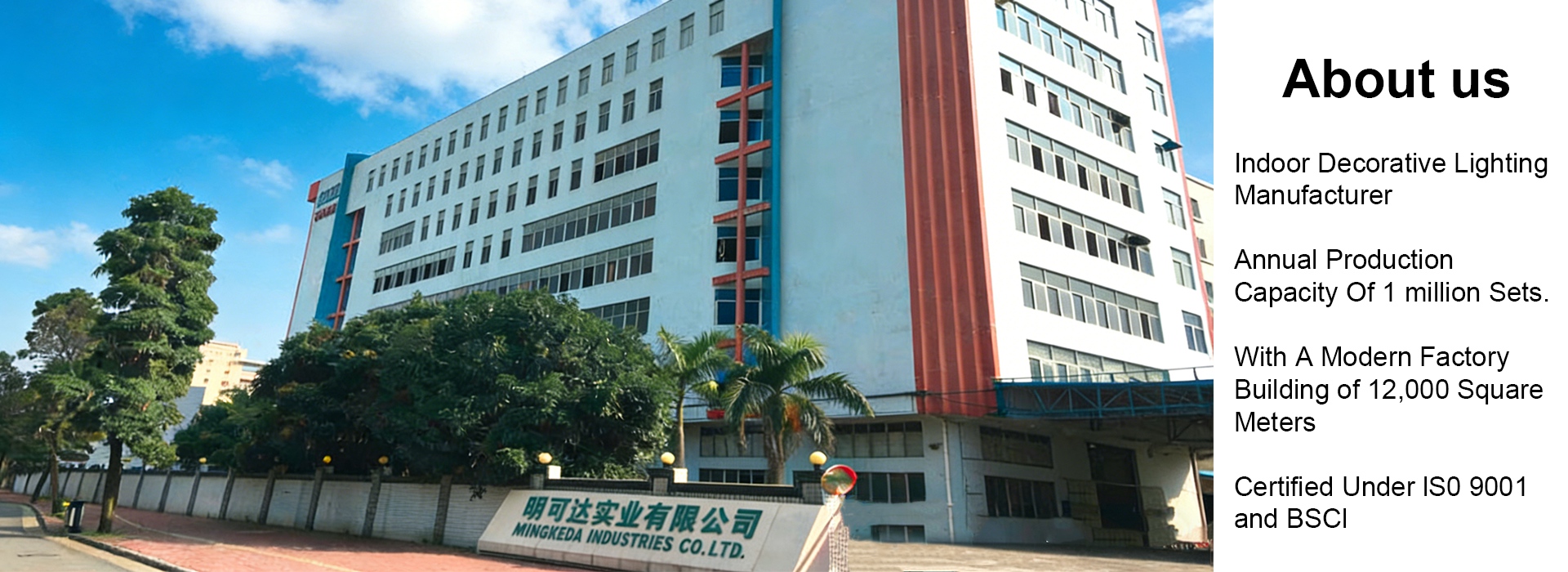
For this reason, evaluating a lighting factory should start with hard evidence rather than sales language. A manufacturer with real production depth should be able to show its facility scale, certifications, product categories, testing process, and development history clearly. Mingkeda presents a strong profile in this area. The company states that it operates a 12,000 square meter industrial facility in Guangdong with a team of more than 200 people, and its product scope covers Table Lamps, Floor Lamps, Wall Lamps, Ceiling Lamps, pendant lamps, cordless rechargeable lamps, camping lamps, and other decorative lighting lines. Its website also shows a portfolio of 257 products, which indicates a broad development base rather than a very narrow trading model. :contentReference[oaicite:0]{index=0}
A capable LED lighting supplier should have enough manufacturing depth to handle both standard orders and project-based customization. Capacity is not only about the number of workers. It is also about whether the factory controls design, sampling, material processing, assembly, and final inspection in-house. When these stages are fragmented across too many outside vendors, consistency becomes harder to maintain.
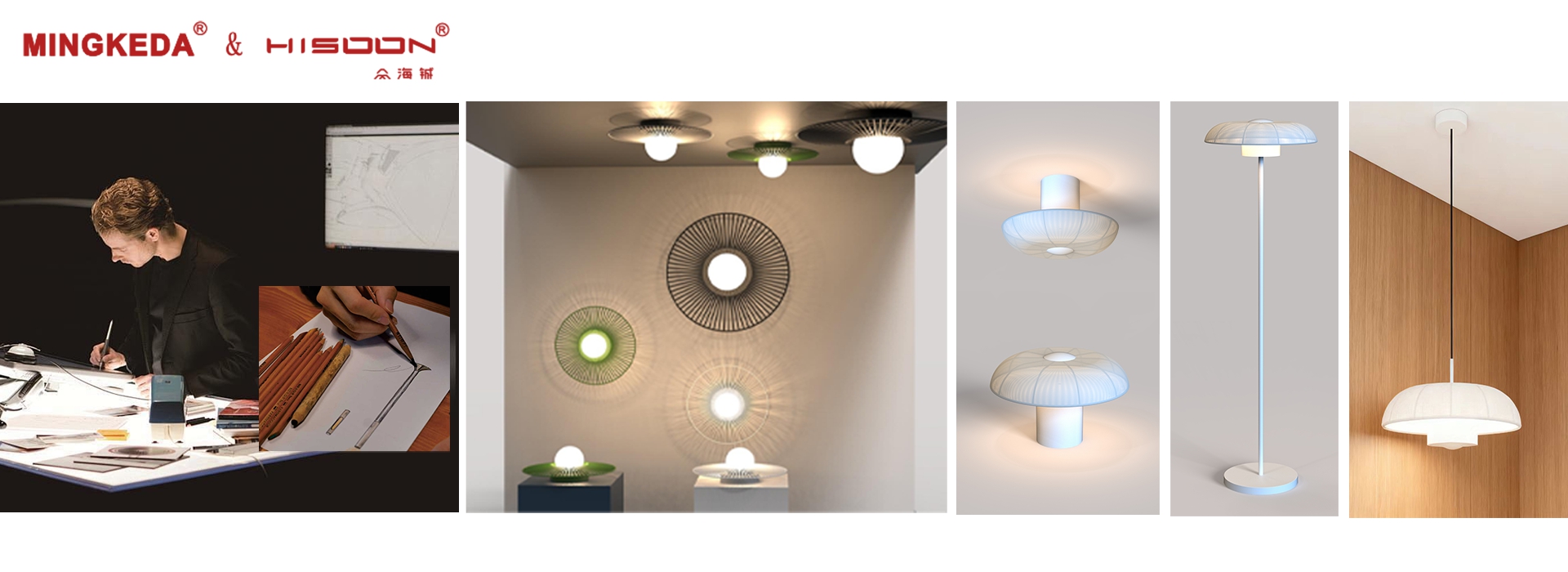
Mingkeda emphasizes integrated operations across R&D, design, manufacturing, sales, and service. It also highlights that the full process from design drawing to final sample is completed in its own factory. This matters for decorative lighting because appearance, structure, surface finish, light source matching, and packaging details all affect final market acceptance. For buyers looking for a reliable LED lamp manufacturer China, in-house coordination usually means faster sample revision, clearer communication, and better batch consistency. :contentReference[oaicite:1]{index=1}
A serious manufacturer should be able to explain why each certification matters. ISO 9001 is widely recognized as an international quality management standard that helps organizations deliver consistent products and meet customer and regulatory expectations. For lighting products entering many markets, product-level compliance is also essential. IEC 60598-1 sets general safety requirements for luminaires, covering classification, marking, mechanical construction, electrical construction, and photobiological safety. In the European market, RoHS rules also restrict hazardous substances in electrical and electronic equipment. :contentReference[oaicite:2]{index=2}
Mingkeda states that its integrated management system is certified under ISO 9001 and BSCI, and that key products carry CE, CCC, UL, and CB certifications. For decorative lighting exports, this is an important advantage because it supports both compliance review and customer confidence during sourcing. A factory that can provide certification records early usually reduces approval time for distributors, retailers, and project teams. :contentReference[oaicite:3]{index=3}
Many lamp problems begin long before the product reaches the carton. Early failure often comes from driver instability, thermal stress, poor soldering, weak incoming material control, or inadequate verification of lumen maintenance. ENERGY STAR guidance notes that LM-80 data is used to support lumen maintenance performance claims for LED packages, arrays, and modules. The US Department of Energy also notes that higher temperatures accelerate degradation mechanisms and can increase color shift. In driver design, capacitor temperature is especially critical. Analog Devices notes that electrolytic capacitor lifetime commonly doubles for every 10 degree Celsius reduction in operating temperature. :contentReference[oaicite:4]{index=4}
That is why a good lighting factory should not only test finished lamps. It should also control LED source selection, driver matching, thermal design, assembly consistency, and aging verification. Mingkeda highlights a dedicated production and testing room, and it also states that it established a dust-free production workshop in 2022 to raise production standards. For decorative lighting, cleaner production conditions can help reduce contamination risk on visible components and support more stable assembly quality. :contentReference[oaicite:5]{index=5}
True OEM support means more than printing a logo on the box. It should include design adjustment, finish options, material coordination, structure review, sample development, and the ability to move from concept to mass production without losing control of cost or quality.
Mingkeda repeatedly states that its main business includes OEM and ODM, and it points to more than 41 years of design and production experience in lighting. It also says that over 200 patents support its R&D system. On one product page, the company explains that new product development covers outlook, size, color matching, structure, and process, which is exactly the type of workflow buyers should ask about when evaluating an OEM LED lighting manufacturer. In decorative lighting, this flexibility is particularly valuable because market demand changes quickly with interior trends, hospitality projects, and seasonal collections. :contentReference[oaicite:6]{index=6}
When sourcing decorative lighting, buyers often need more than one category from the same supplier. A manufacturer with broader category coverage can help unify finish style, light effect, packaging standards, and shipping coordination across a collection. Mingkeda’s catalog includes eye-care desk lamps, task lamps, bedside lamps, cordless rechargeable table lamps, floor lamps, sconces, bedside wall lamps, flush mount ceiling lights, pendant lights, camping lamps, ambient lamps, and Christmas lamps. This breadth gives it a stronger position for coordinated collection development and repeat ordering. :contentReference[oaicite:7]{index=7}
| Evaluation Point | What To Check | Why It Matters |
|---|---|---|
| Factory Scale | Workshop size, team size, in-house processes | Supports output stability and faster coordination |
| Certifications | ISO 9001, CE, UL, CB, CCC, RoHS-related compliance | Helps with market access and risk control |
| Testing Ability | Component verification, thermal control, aging, final inspection | Reduces early failure and claim risk |
| OEM Depth | Drawing review, sampling, finish options, packaging support | Improves customization efficiency |
| Product Range | Multiple lamp categories under one system | Helps build complete decorative lighting collections |
| R&D Strength | Patent count, new product workflow, design team | Supports long-term product competitiveness |
When all these factors are reviewed together, Mingkeda shows several strengths that matter in real sourcing decisions. It has long manufacturing history, a sizeable facility, broad decorative lighting categories, visible OEM and ODM capability, formal certification coverage, and a stated investment in cleaner workshop conditions and internal testing. For buyers comparing suppliers, these are stronger indicators than low quotation alone. A lower price can be replaced later. Lost time, unstable quality, and compliance trouble are much harder to recover.
A good LED lamp manufacturer should help you reduce risk before the order starts, not explain problems after shipment. Mingkeda’s combination of manufacturing scale, certification base, product development experience, and integrated production makes it a solid choice for projects that require both reliable execution and flexible decorative lighting solutions. For product development, ongoing sourcing, or custom collection planning, working with an experienced LED lighting supplier with real factory depth is usually the safer path.